With only a month to go, It is starting to get to the pointy end of training for the Tarawera 100 Mile Endurance Run.
It’s safe to say that I’ve never nailed the training for this race. The first time I signed up in 2017 for the 2018 running of the race, I broke myself, getting diagnosed with two pelvic stress fractures two weeks before the race. I over-raced, under ate, experimented with running fasted (0/10 do not recommmend) and literally broke my bones.
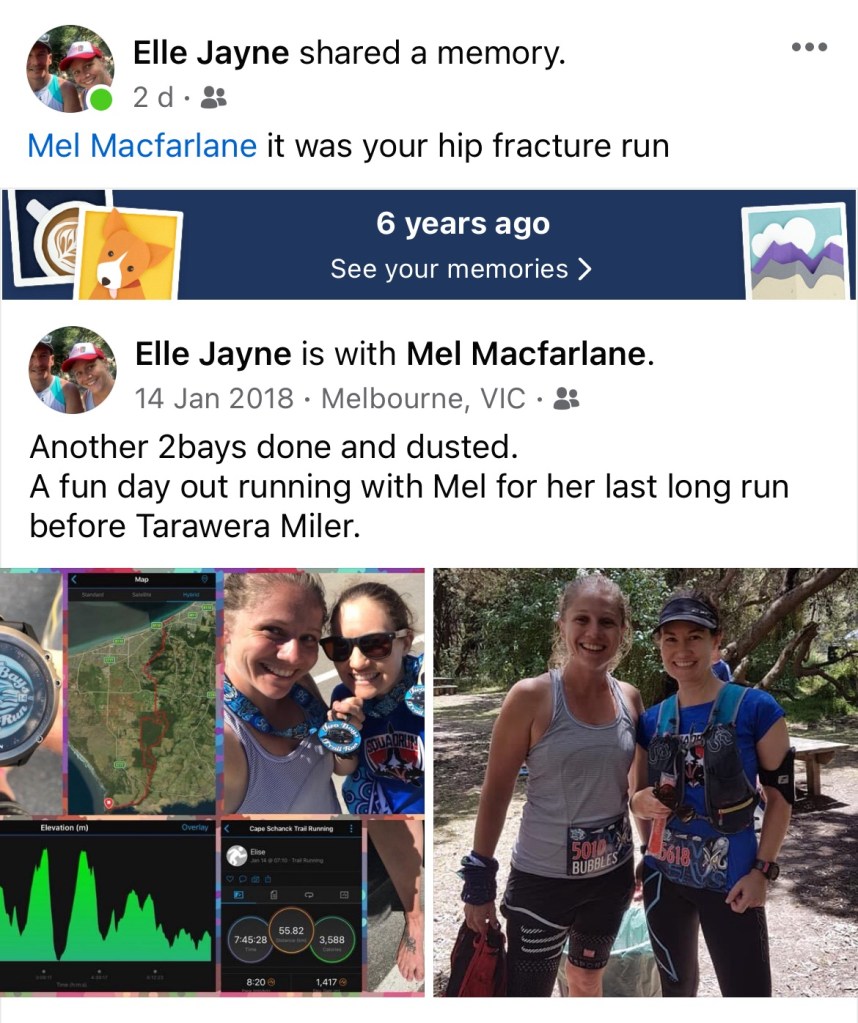
The second time I signed up, 2021 there was a pesky pandemic that had the event either cancelled or NZ athletes only.
My entry rolled over to 2023, in which I started with some sort of cold, (not the C* one as all the tests would indicate but some sort of head cold) and then ended up having to withdraw due to what I thought was a super serious injury, but turned out to just be a lazy bum cheek, that flared up my hip bursa and made walking impossible. I pulled out at 60k.
I struggled throughout 2023 with all sorts of compensation issues that all stemmed from a fall at Ultra Trail Kosciusko in December 2022. As soon as I would fix one issue, another would pop up. It was an ongoing game on injury wack amole.
So what am I doing differently to make sure that 2024, my final year at Tarawera, will result in the goal of crossing that finish line and receiving my pounamu?
In general I don’t think my training is that different to what I have done in previous years, but I think I have been smarter about it and taken more care with overall stress on my body.
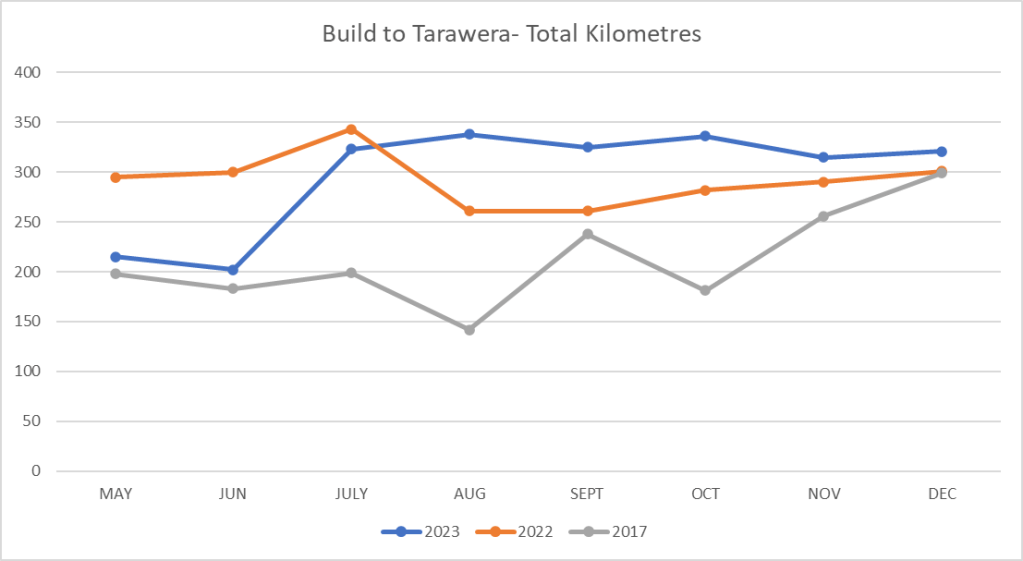
I feel like I have been a lot more consistent this year, running most days, having a long run of 2 hours or more each week and not over racing.
Looking at the total kilometres each month from my two previous attempts, the build up until the end of the year is pretty similar. But when you look closer into the data, I have ran more often and more consistently than previous years. I’ve run more doubles and taken less breaks after longer runs.
In 2017, whilst I ran a similar amount of kilometres and for a similar amount of time, it was more ‘weekend warrior’ style, where I would do a “race” as a training run but taper into it and take a week off afterwards. I did that every month. I was also doing absolutely no strength training.
Five years later, I am more consistent and intentional with all aspects of my training and I feel like the experience I have gained in other longer races whether that be Old Ghost, Surf Coast Century, UTA or Ultra Trail Kosci has made a significant impact on my readiness to complete 100 miles.
My 2024 training started way back when I was on the looser bus back to the start line in February last year. Devastated, I swore it wouldn’t happen again but I was also proud of my decision in that I genuinely thought something was really wrong and I would have been doing permanent damage. When the pain subsided a few days later, I realised it wasn’t as bad as I thought and I could probably have walked to the finish. To be honest, I didn’t think it was tough enough to do it. I didn’t want to walk 100km. I wanted to run it.
Enter mental training!
Turns out, I am. Tough enough, that is.
When the shit hit the fan at Ultra Trail Australia and my knee stopped working, I essentially walked it in. It wasn’t in the time I wanted, but I got that finish. I didn’t quit. I wanted it and I fought, with a hobble, to the end.
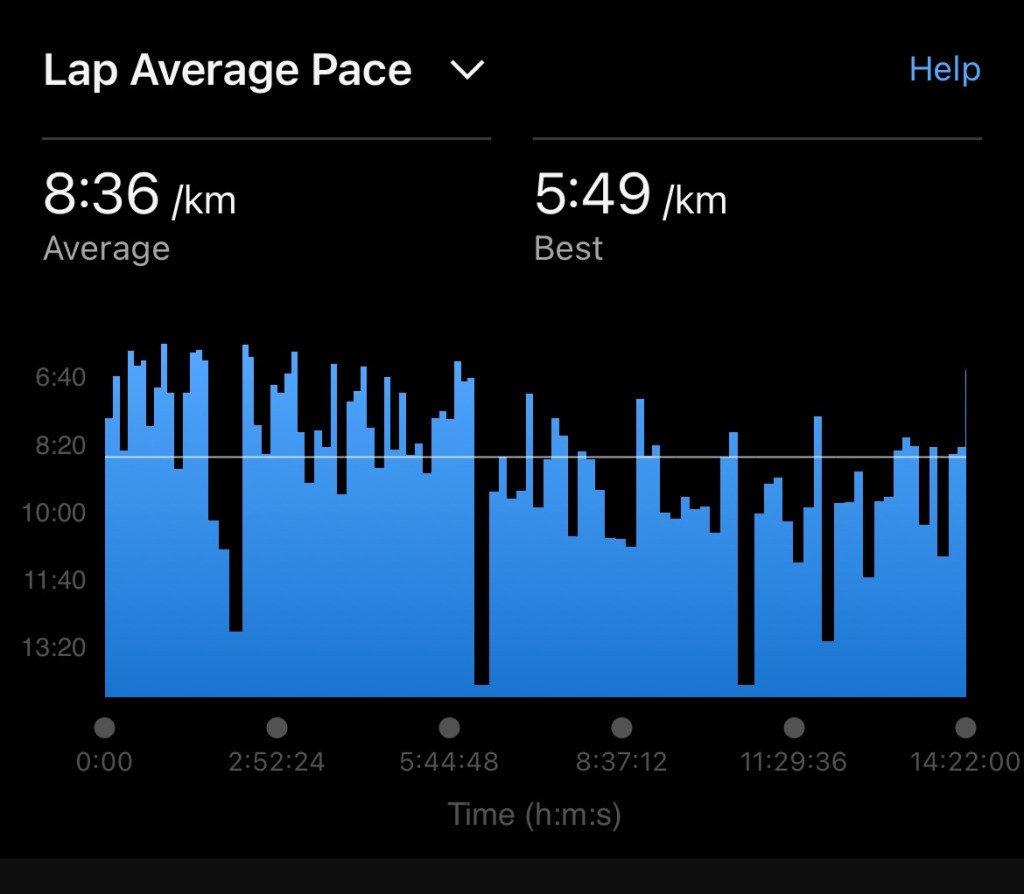
At Surf Coast Century, I deployed trick after trick and game after game to keep myself moving forward. I didn’t give up when I couldn’t run 5 min/k’s anymore or when it got super hot. Don’t get me wrong, it was still quite slow when you look at the average km pace and compared to when I ran it in 2017 it was only 30 seconds per km faster but I know the consistency across the race was better even with the obvious slow down after 50k.
It looks like someone said to me at the half way point, ok you can stop aiming for 7min k’s and focus on 10 min k’s now!
The race wasn’t without pity party’s but I’m doing better at keeping moving whilst having a meltdown!
A few weeks ago I was forced to remind myself again that I can be tough if I have to be and run when it doesn’t feel good.
It was hot, it was humid, I was tired but I kept going and really tried not to whinge and complain. It was long week.
I had a five day turn around for long runs just because of work and it was a hotter run than I would have liked. I freaked for a few days, worried that Tarawera was going to be hot and I was going to hate it. I frantically researched humidity protocols and heat training.
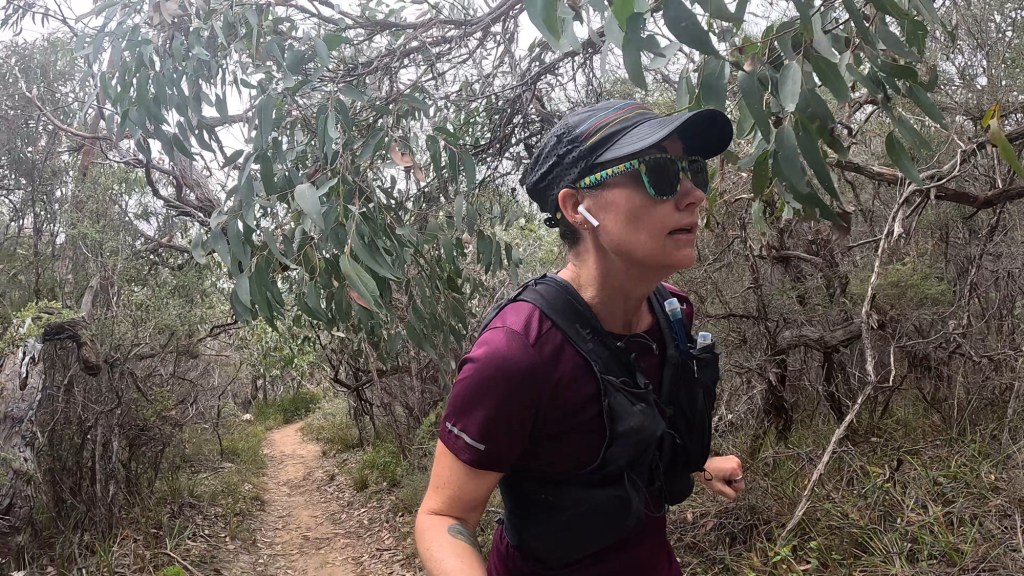
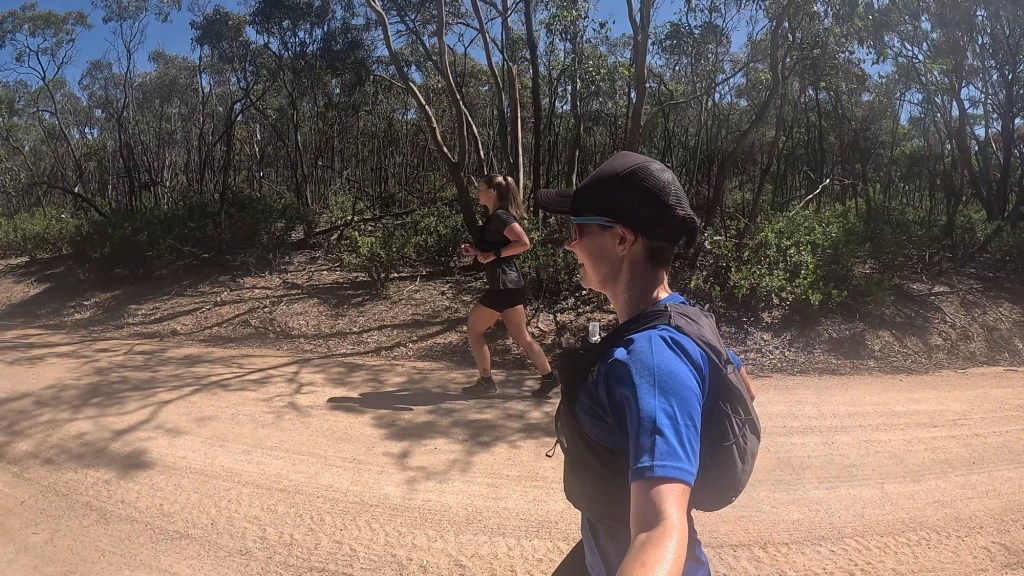
Last weekend, I put together a mini training camp based on Jason Koops plan. I say “mini” because I had to do it at home and drive a little bit the trails each day so I cut off a little bit of the millage.
I think the whole concept is if you focus on nothing else, no work, no family, no other commitments, you can handle the stress of running heaps of extra distance over a weekend. I couldn’t remove everything so cut 5-7km off each day.
I ran 19k the first day, 38k the second and 17k the third day.
I’d done “back to back” long runs (consecutive long runs) or “doubles” (one run in the morning and one in the afternoon) but I’ve never really understood the concept of “running on tired legs”. It just didn’t seem to work. But come day 3 of my training camp and I suddenly understood.
It was an unplanned run/walk from the start but that’s ok, I know how to do that now. I shuffled along, played silly games, ate my snacks and came home to die a slow death!
I also the added benefit of this little block being right before my period so the effort required was high. Luckily, I shouldn’t have to deal with it on race day but hey if I did, I think I could manage!
With four weeks to go, I’m now focussing on making it to the start line healthy. Nothing to crazy, just making sure I get enough sleep, wear a mask in close contact places and eating well. My HRV and sleep tanked after the training camp, probably the combination of the effort and my period (which always messes with my sleep), so I took two days off and now I’m back into it for a few more weeks of training before the taper.
Getting to the start line is just as much of an accomplishment as getting to the finish line. Let’s get their healthy.
 MelMac Runs